
South Asian Heritage Month 2026Storytelling and making workshops that used the saree to open conversations about family, memory, migration and belonging
Supported by South Asian Heritage Month, Welcome to Wandsworth, Wandsworth Council and The National Lottery Heritage Fund
Three free workshops · Kambala Creative Health and Wellbeing Centre · Focus Hall, Alton Estate · Sound Minds · Concept, design and facilitation by Roopa Basu
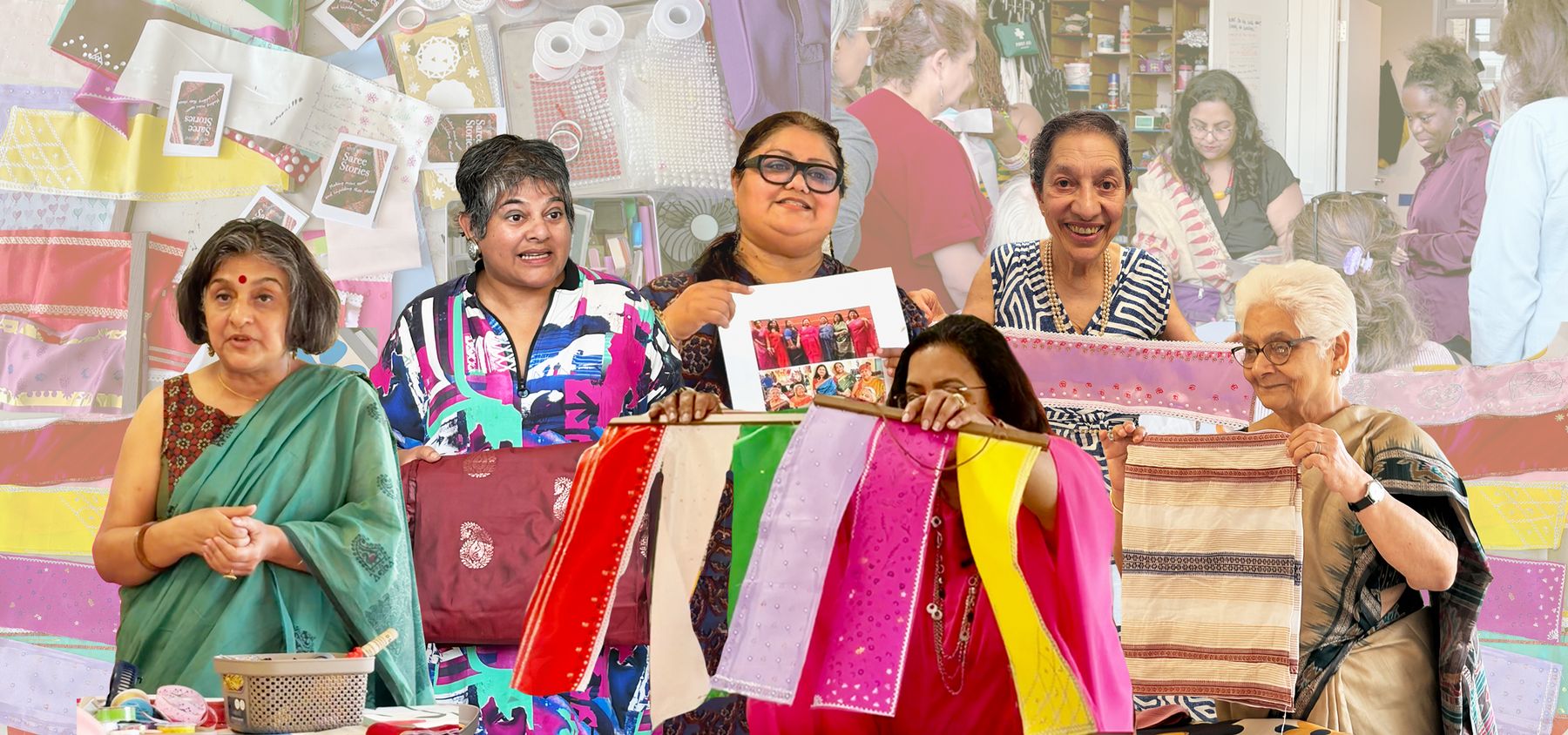
Saree Stories was a series of free, creative workshops I created for South Asian Heritage Month 2026, under the theme Unity in Diversity. Each session began with a storyteller sharing what sarees had meant in their life. Then everyone made their own mini saree through colour, pattern, collage and embellishment.
The workshops ran across Wandsworth, at Kambala Creative Health and Wellbeing Centre, Focus Hall on the Alton Estate and Sound Minds. You didn’t need to know anything about sarees, or have any making experience, to take part.
The StoryOne length of cloth, many ways in
In 2025, at the 18th-century temple at Degaldoruwa in Sri Lanka, a monk pointed out a woman in one of the murals whose saree was draped differently. The way she wore it showed she was from India. Like me, he said, with a smile.
That detail stayed with me. One length of cloth, but the way it is woven, worn, folded or draped can tell you where someone comes from. For a project about Unity in Diversity, it was the right place to begin.
I didn’t want to present the saree as one neat story, because there isn’t one. I wanted a space where people could meet different histories and bring in their own memories, questions and experiences.
Creative ProcessStart with a story, then make
Every workshop opened with a storyteller. Beginning with someone saying “this is what this cloth meant in my life” gave everyone else a way in, through colour, pattern, family memory or simple curiosity.
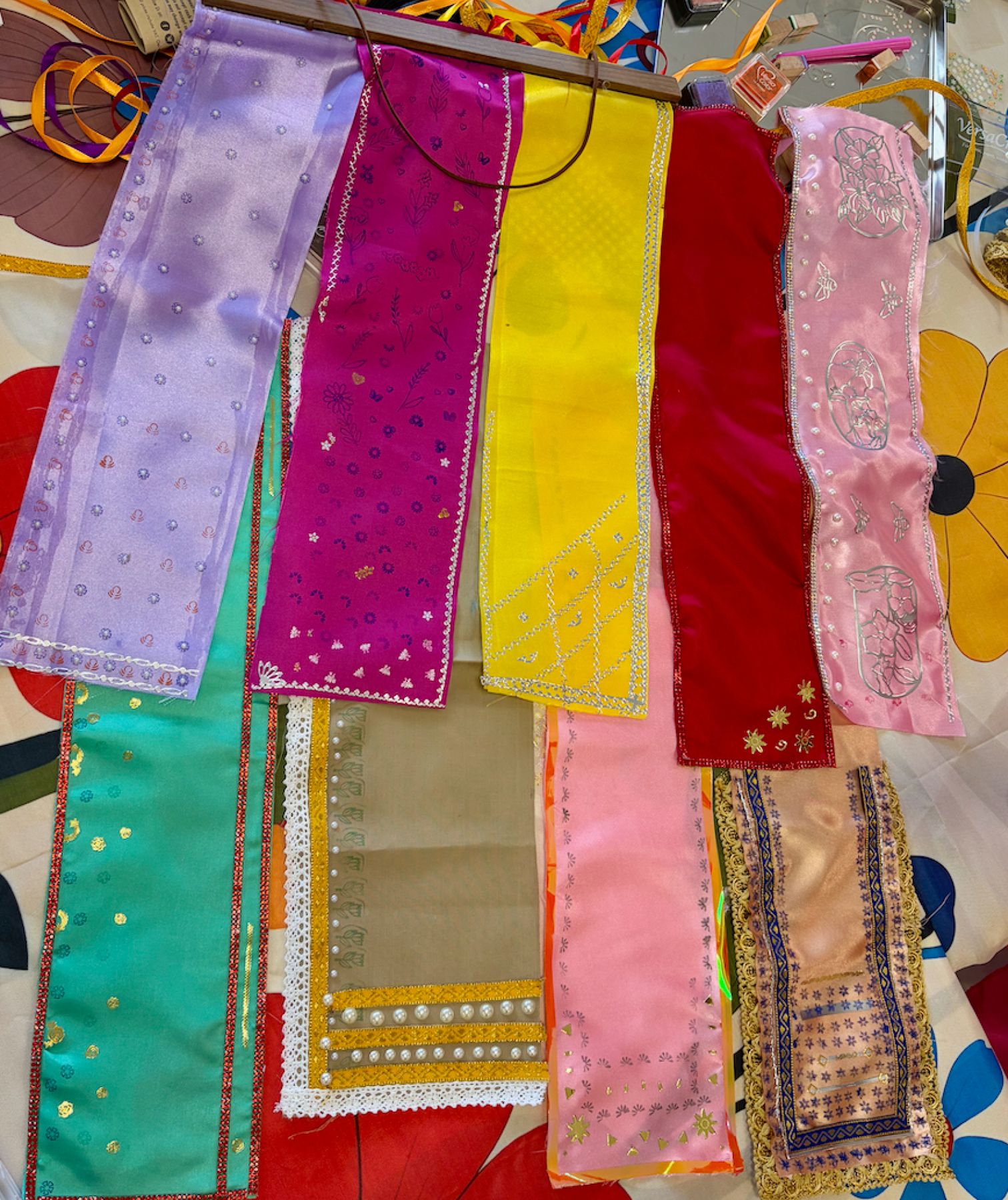
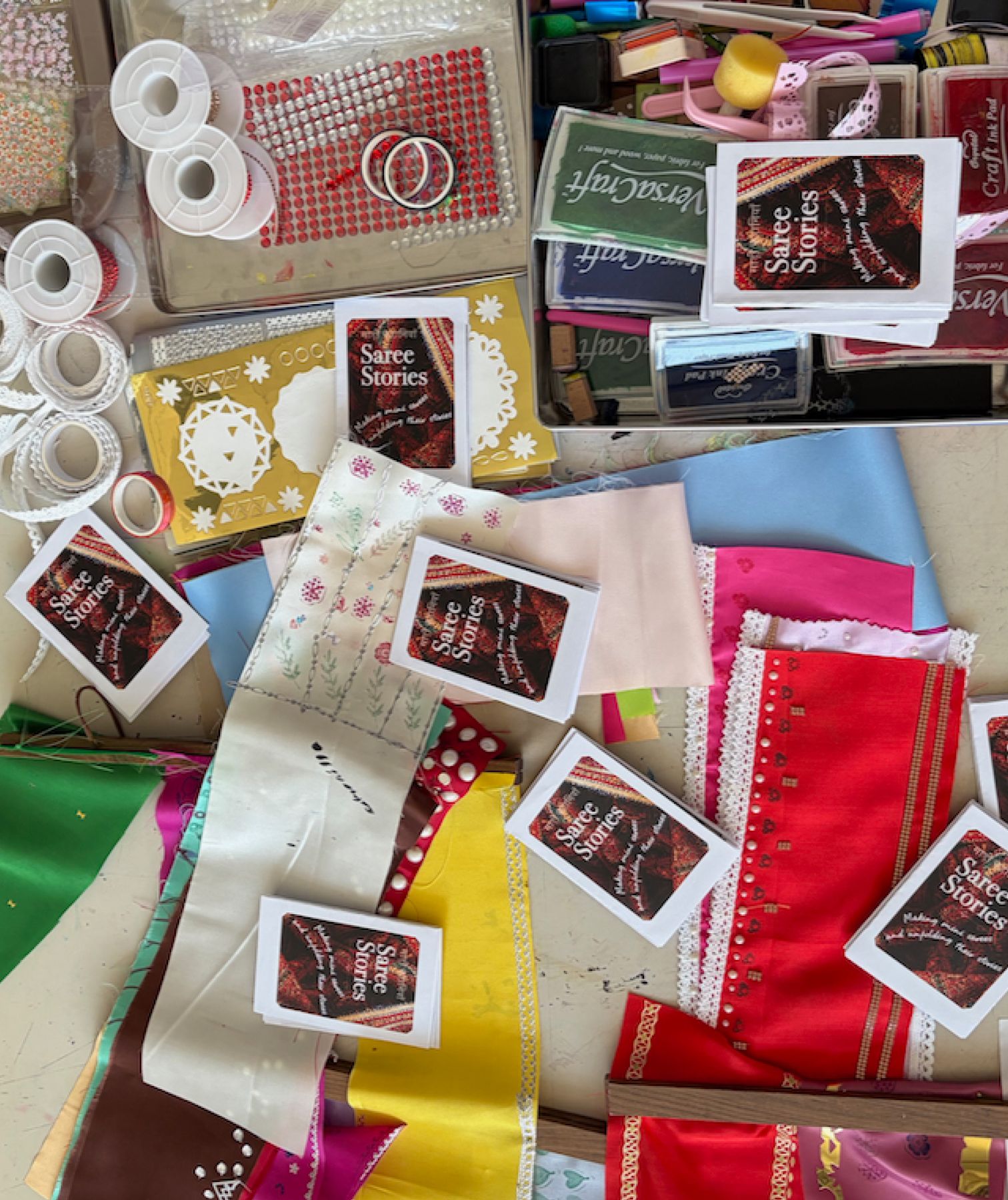
Then everyone made. I designed a simple mini-saree format and a table full of colour, pattern, drawing, collage and embellishment materials, with no right way to make one. Some people worked meticulously, some quickly. People borrowed ideas, compared colours and helped their neighbours, and every finished piece was different: the same basic cloth, interpreted in entirely individual ways.
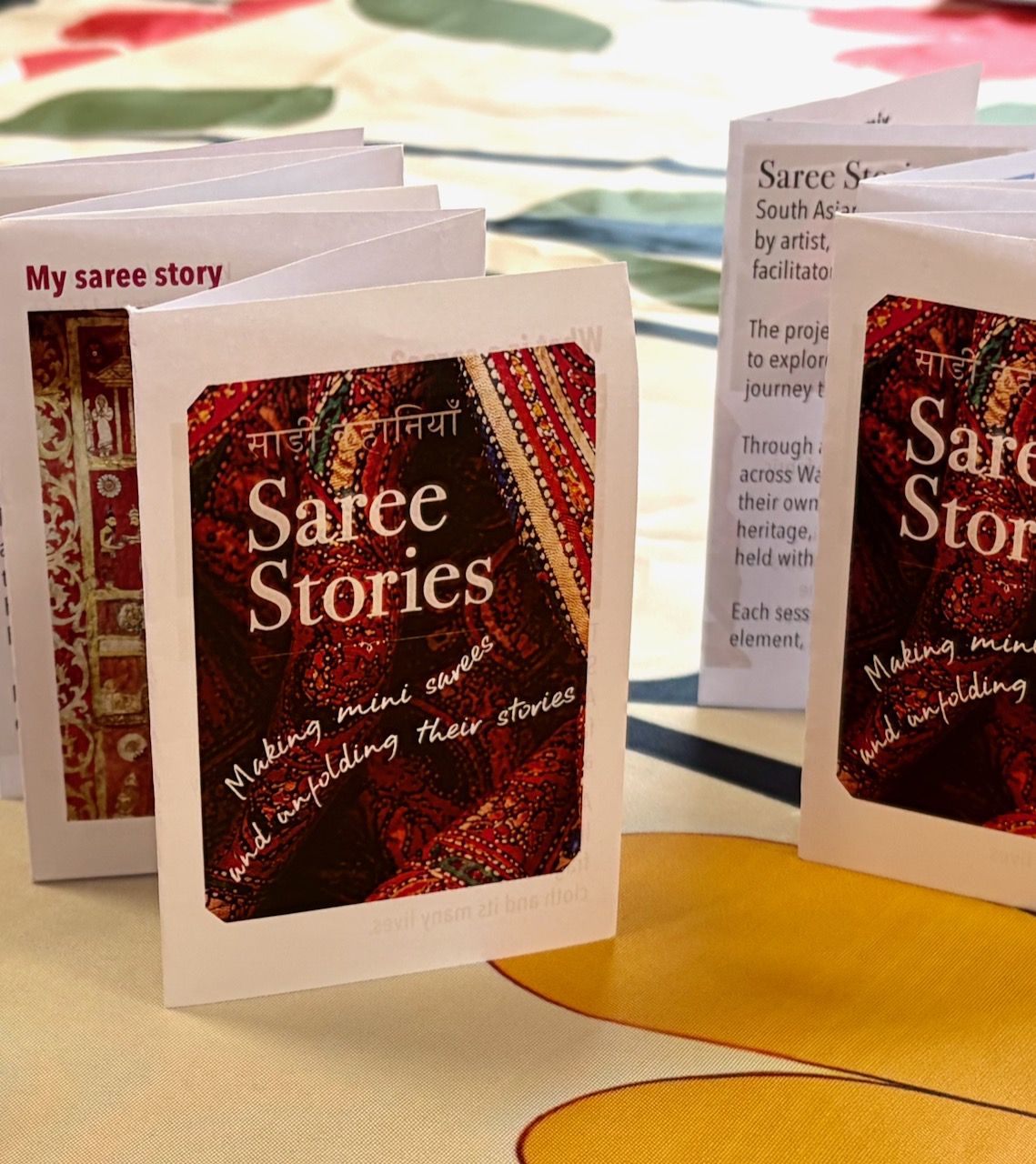
I also made a small concertina zine as a visual prompt. It set out to be a brief introduction to the saree and became something more honest: a collection of folds, facts and fragments.
The WorkshopsThree rooms, five storytellers
Kambala Creative Health and Wellbeing Centre
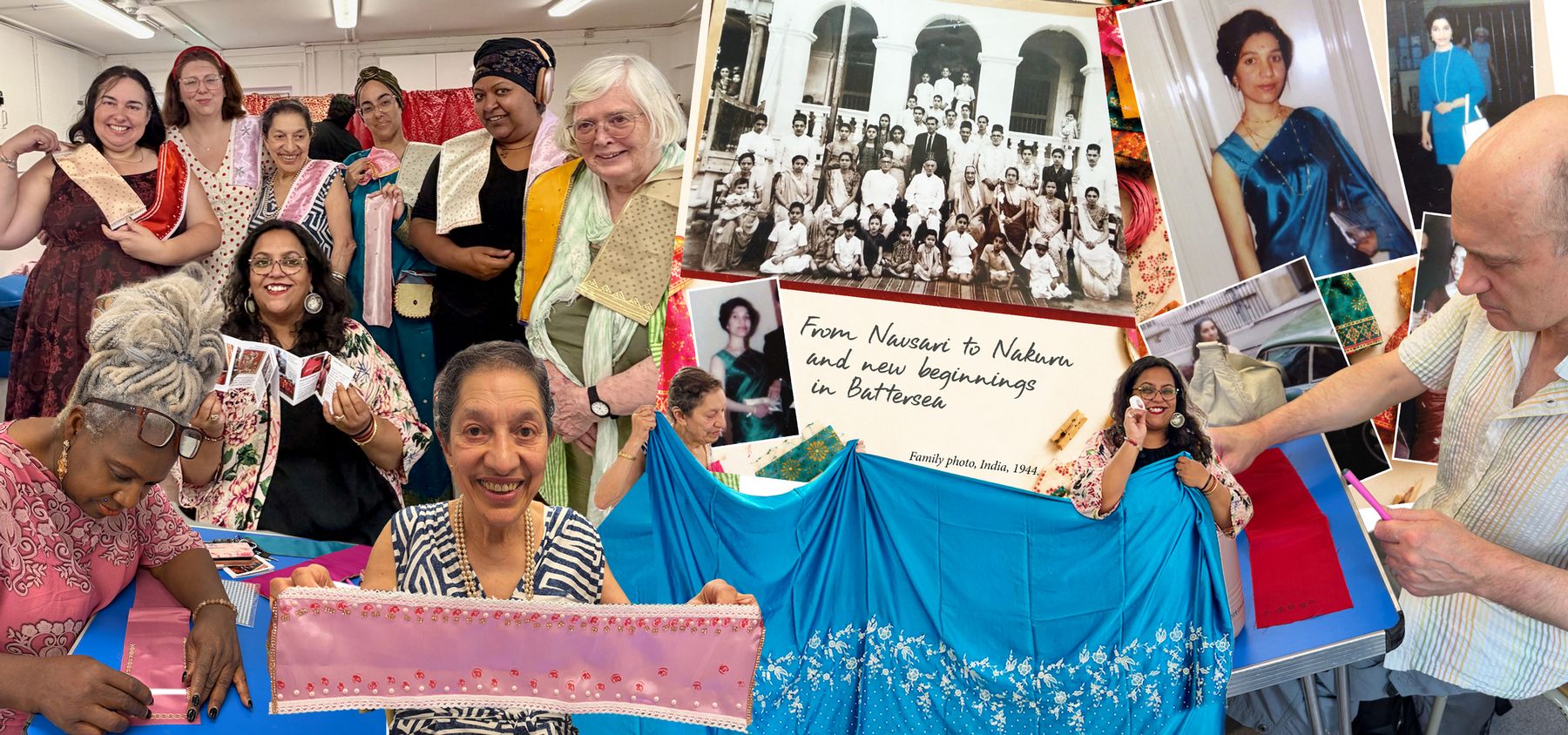
Heroine, aged 82, traced a journey from Gandevi and Navsari in Gujarat to Mombasa, Nairobi and Nakuru, and finally to Battersea. One of her sarees held a whole geography: fabric bought in Hong Kong, embroidery finished in Bombay, worn to a wedding in London.
Focus Hall, Alton Estate
Suchi brought Bengal handloom cottons and family photographs. Madhu Aunty and her daughter Jayanti brought Kashmiri heirlooms, including a silk saree over 100 years old with its original silver zari border. The conversation ran from five- and nine-yard sarees to the question everyone wanted answered: how do you wash them?
Sound Minds
Bangladeshi writer and poet Sheema Haq spoke about her late mother, and remembered South Asian women in sarees on Wandsworth’s streets. I brought photographs of South Asian women in sarees at 1980s London protests, and the saree moved from heirloom into public life.
Kambala Creative Health and Wellbeing Centre
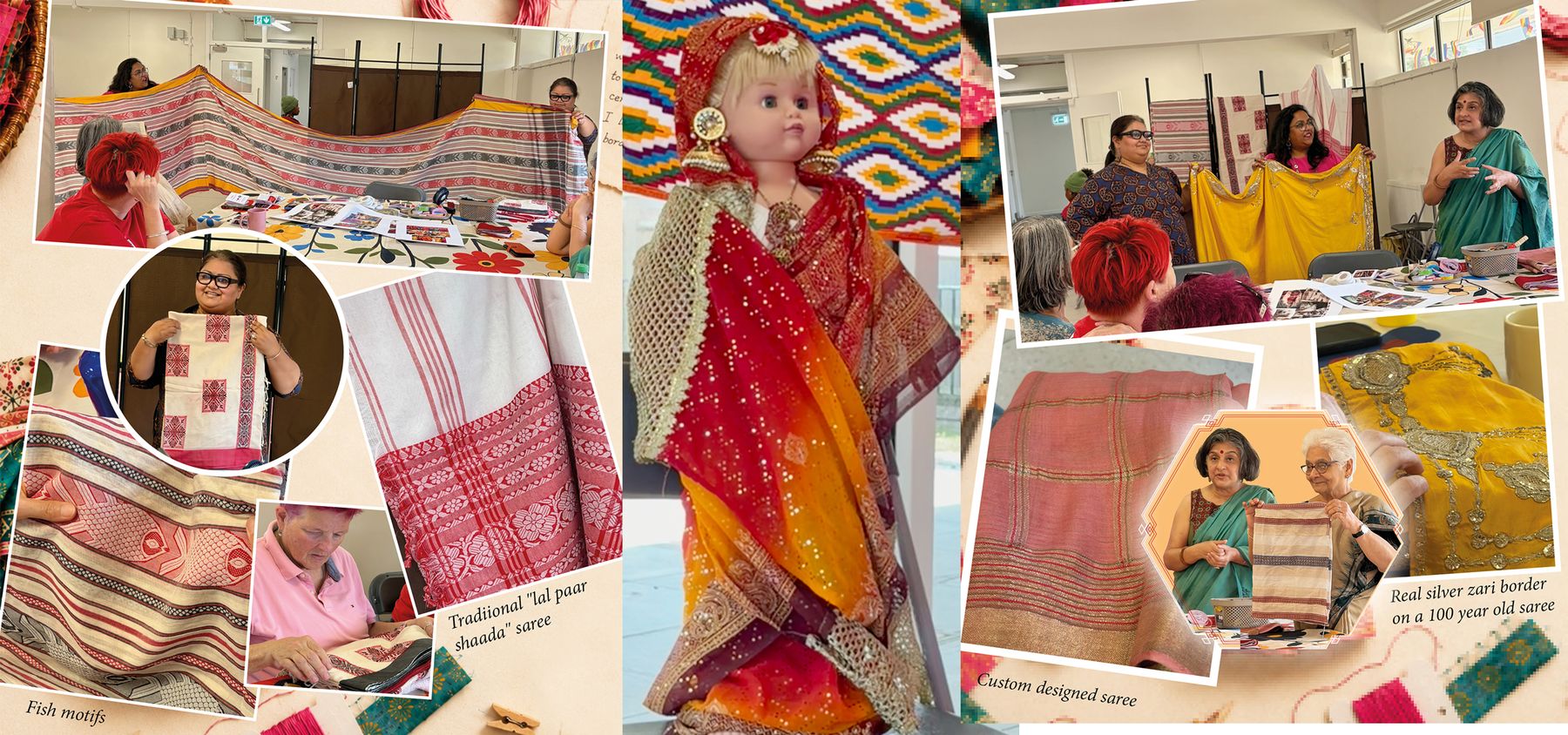
Focus Hall, Alton Estate
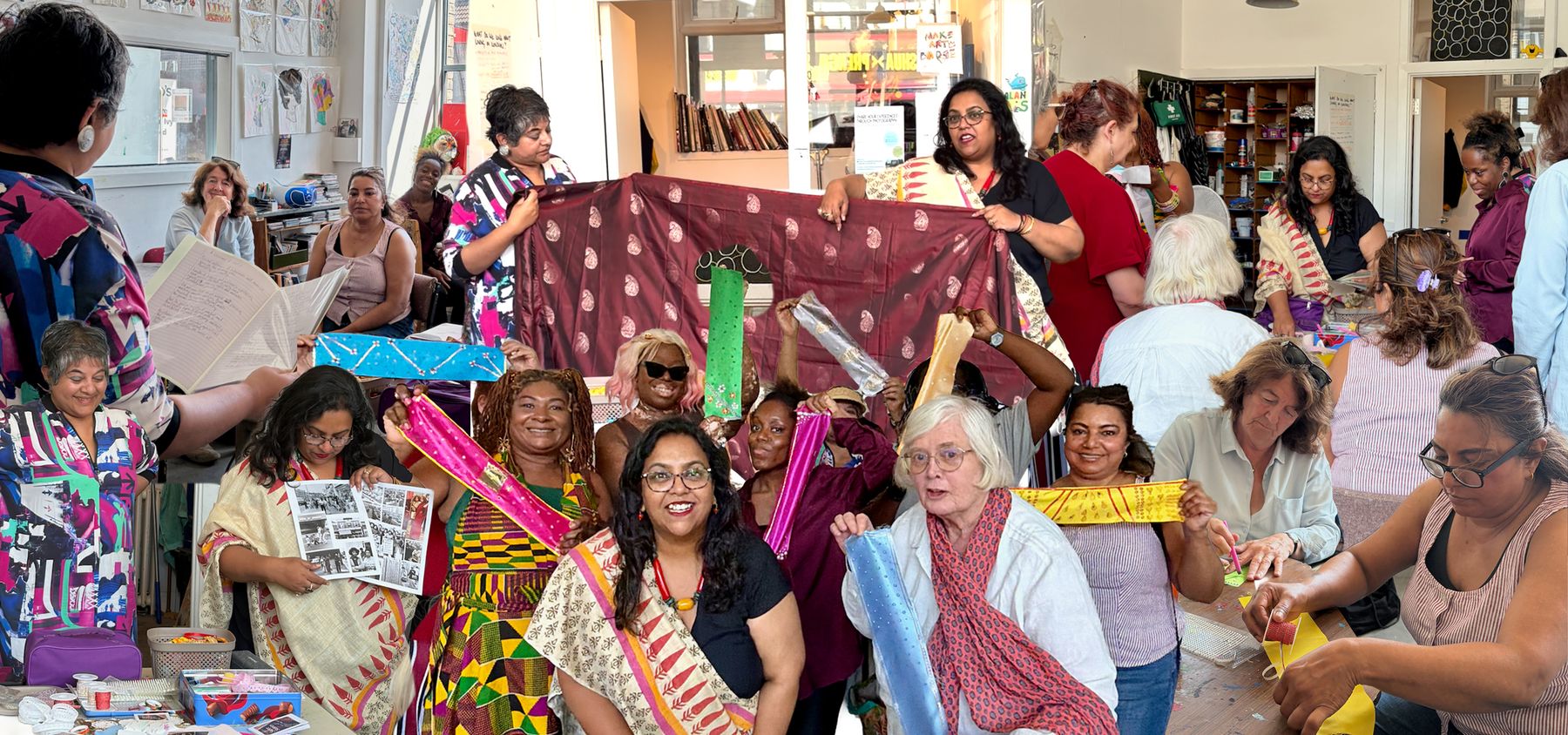
Sound Minds
My RoleConcept, design and facilitation
I conceived and led Saree Stories, from writing the funding bid to running the evaluation. I developed the concept and the storyteller format, designed the mini-saree activity and the concertina zine, coordinated the partner venues and facilitated every workshop.
My role was to hold the creative direction while keeping each session open enough for people to bring their own stories in.
Community ImpactWhat it made possible
- 53 people took part across three free workshops in Wandsworth: a creative health centre, a community hall on the Alton Estate and Sound Minds.
- A room as varied as the theme: from teenagers to a storyteller of 82, and about half South Asian (Indian, Pakistani and Bangladeshi heritage) alongside Ethiopian, white British and European participants.
- Around a third were trying a creative workshop like this for the first time, and almost everyone said they hadn’t realised how many kinds of saree there are.
- Once the storytellers began, stories spread across the room. Then the making brought a noticeable calm: hands busy, the room quiet and absorbed.
- Everyone took their mini saree home, and participants asked when the next sessions would be.
Feedback gathered verbally and by show of hands.
“I have never made anything so colourful in my life.”
~ Workshop participant
Partners & CreditsWho made it happen
- Concept, artistic direction and facilitation: Roopa Basu
- Workshop support and photography: Taiwo
- Storytellers: Heroine, Suchi, Madhu Aunty, Jayanti and Sheema Haq
- Venues and partners: Kambala Creative Health and Wellbeing Centre; Focus Hall, Alton Estate; Sound Minds (Bridging Minds session, supported by the Culturally Mindful legacy programme)
- With thanks to: Sandra Muñoz, SW15 Women’s Network and Angel
- Supported by: South Asian Heritage Month, Welcome to Wandsworth, Wandsworth Council and The National Lottery Heritage Fund